Specialists offering this service
See all in searchDemountable barriers: what you need to know
What demountable barriers are
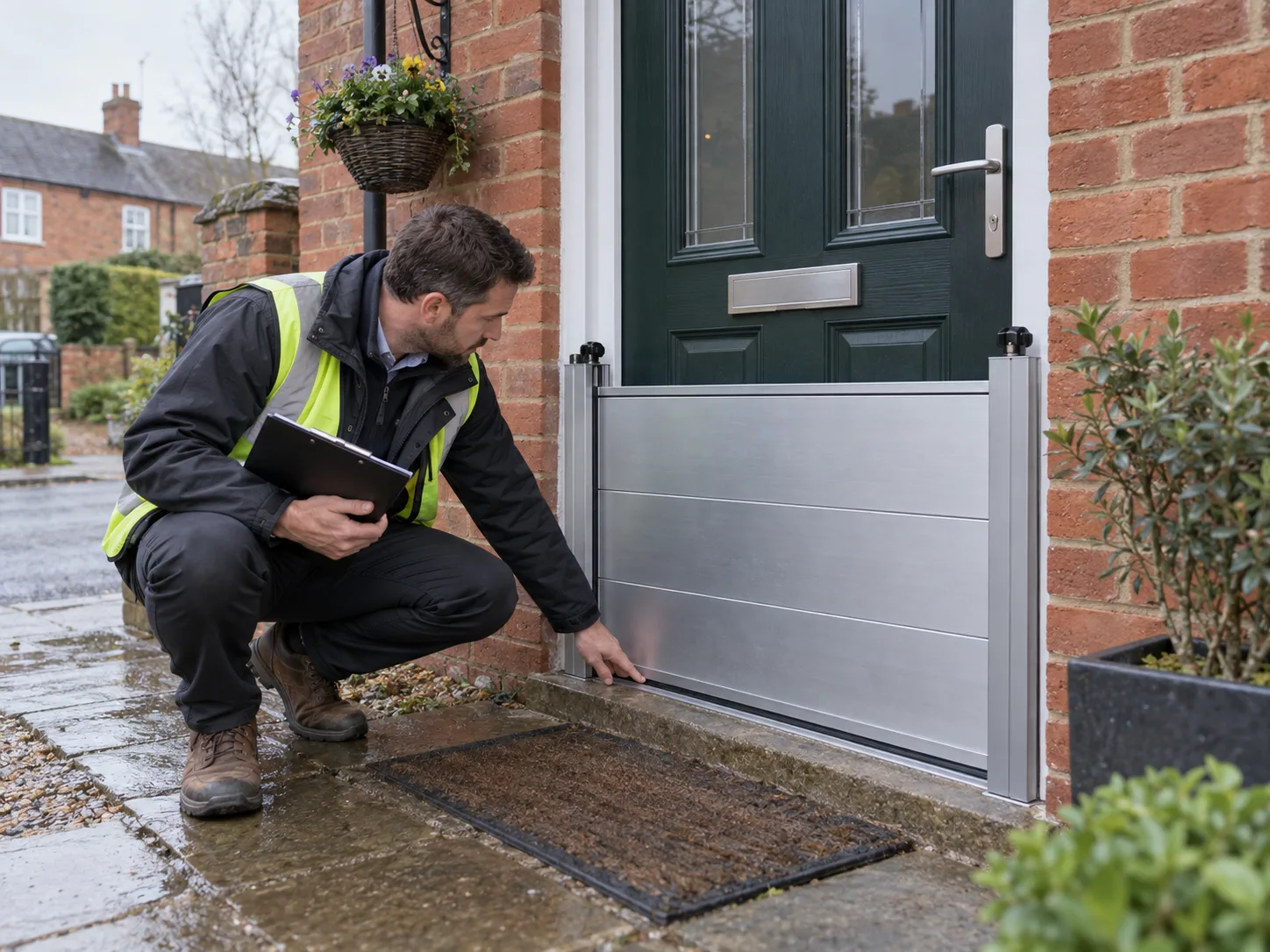
Demountable barriers are flood defences that are erected when a flood is expected and removed afterwards. They range from single boards that fit across a doorway to modular systems of posts and panels that can protect a driveway, a shop front, a car park entrance or the entire perimeter of a building.
Most systems use permanent fixings, such as ground channels, wall brackets or sockets set into the ground, which remain in place all year. When a warning is issued, the posts and panels are taken from storage and slotted into these fixings. Seals compress against the ground and between panels to limit leakage.
Types of system
Doorway barriers are the simplest form, similar to flood gates, sized to a single opening. Perimeter systems use intermediate posts so that longer runs can be protected, often with panels stacked to the required height. Freestanding systems need no permanent fixings and rely on their own weight or on water pressure to hold them in place; these can be useful where fixings are not possible but usually need a level, sound surface to seal against.
Self-closing barriers are also available for some sites. They sit below ground and rise automatically as water arrives, providing protection without anyone needing to be present. They are more expensive and require civil works to install, but can be valuable where warning times are short.
Where barriers work well
Barriers are most effective where flood warnings give enough time to deploy them, where water is expected to be relatively shallow, and where floods do not last for long periods. They suit properties with wide openings such as garage doors, patio doors and shop fronts, and sites where protecting the approach to a building is more practical than sealing every door.
They are less suited to groundwater flooding, which can rise through floors and persist for weeks, or to situations where no one will be available to deploy them. In these cases, recoverability measures or permanent products may be more appropriate.
Planning for deployment
The best barrier is useless if it cannot be deployed in time. Before purchasing, think about who will put the barriers up, how long it will take, and where the components will be stored. Heavy panels, missing parts and seals that have perished in storage are common problems. A good installer will provide a deployment plan, label each component, and train you to fit the system.
Sign up for flood warnings from the relevant national agency, and practise deploying the barriers at least once a year. For businesses, include deployment in the site emergency plan and make sure more than one person knows how to do it.
Standards and ground conditions
As with doors, look for barrier systems that have been tested and certified for flood resistance, for example under the BSI Kitemark scheme. Certification applies to the product in test conditions. In practice, the surface the barrier seals against is critical. Uneven paving, loose block driveways and porous surfaces can allow water to pass underneath. An installer may need to lay a new concrete or sealed threshold strip for the barrier to perform as intended.
Walls adjacent to the barrier must also be sound. Water can pass through weak brickwork or poorly pointed joints and bypass the barrier altogether.
Costs and maintenance
Cost depends on length, height, system type and groundwork. A single doorway barrier is modest; a perimeter system for a commercial site is a significant investment. Ask for quotations that include ground preparation, fixings, storage solutions and training.
Seals should be inspected annually and replaced when worn. Fixings should be kept free of debris so that posts and panels can be inserted quickly. Keep a record of inspections, as insurers may ask for evidence that measures are maintained.
Finding a specialist
Search Flood Protection Finder by postcode to find installers of demountable barriers in your area. Compare their case studies, coverage and reviews, and request up to three quotations with a single enquiry.
Common questions
How high can demountable barriers go?
Systems are available in a range of heights, but the safe height for a building depends on its structure. Follow survey advice rather than simply choosing the tallest option.
Can I leave barriers up all winter?
Some can, but prolonged installation can affect access and seals. Many owners deploy them only when a warning is issued.
Do barriers work against sewer flooding?
No. Sewer backflow enters through drains and toilets, so non-return valves or other measures are needed.