Specialists offering this service
See all in searchDrainage surveys and improvements: what you need to know
Why drainage matters in flood protection
Drainage is often overlooked when people think about flooding, yet it plays a central role. Poorly maintained or damaged drains contribute to surface water flooding around a property, allow sewer water to enter during a flood, and can prevent the successful installation of measures such as non-return valves and pumps.
Improving drainage can reduce the frequency of minor flooding, speed up recovery after a larger event and make other resilience measures more effective.
CCTV drainage surveys
A drainage survey uses a small camera pushed or crawled through the pipes to record their condition. The survey identifies cracks, displaced joints, root intrusion, collapses, blockages and incorrect connections. It also confirms the route and depth of pipes and where connections join, which is essential when planning non-return valves or new chambers.
A good survey report includes a plan of the drainage runs, video footage and a written summary of defects using a recognised coding system, with recommendations and priorities. This lets you obtain comparable repair quotations.
Common improvements
Jetting clears blockages, silt and fat. Patch repairs and lining can fix cracks and joints without digging, by inserting a resin liner that cures inside the existing pipe. Excavation and replacement may be needed for collapsed or badly displaced sections.
For flood protection specifically, improvements may include installing non-return valves, new inspection chambers for access, rainwater diversion so that roof water does not add to surcharged drains, and soakaways or other sustainable drainage features where ground conditions allow.
Surface water around the property
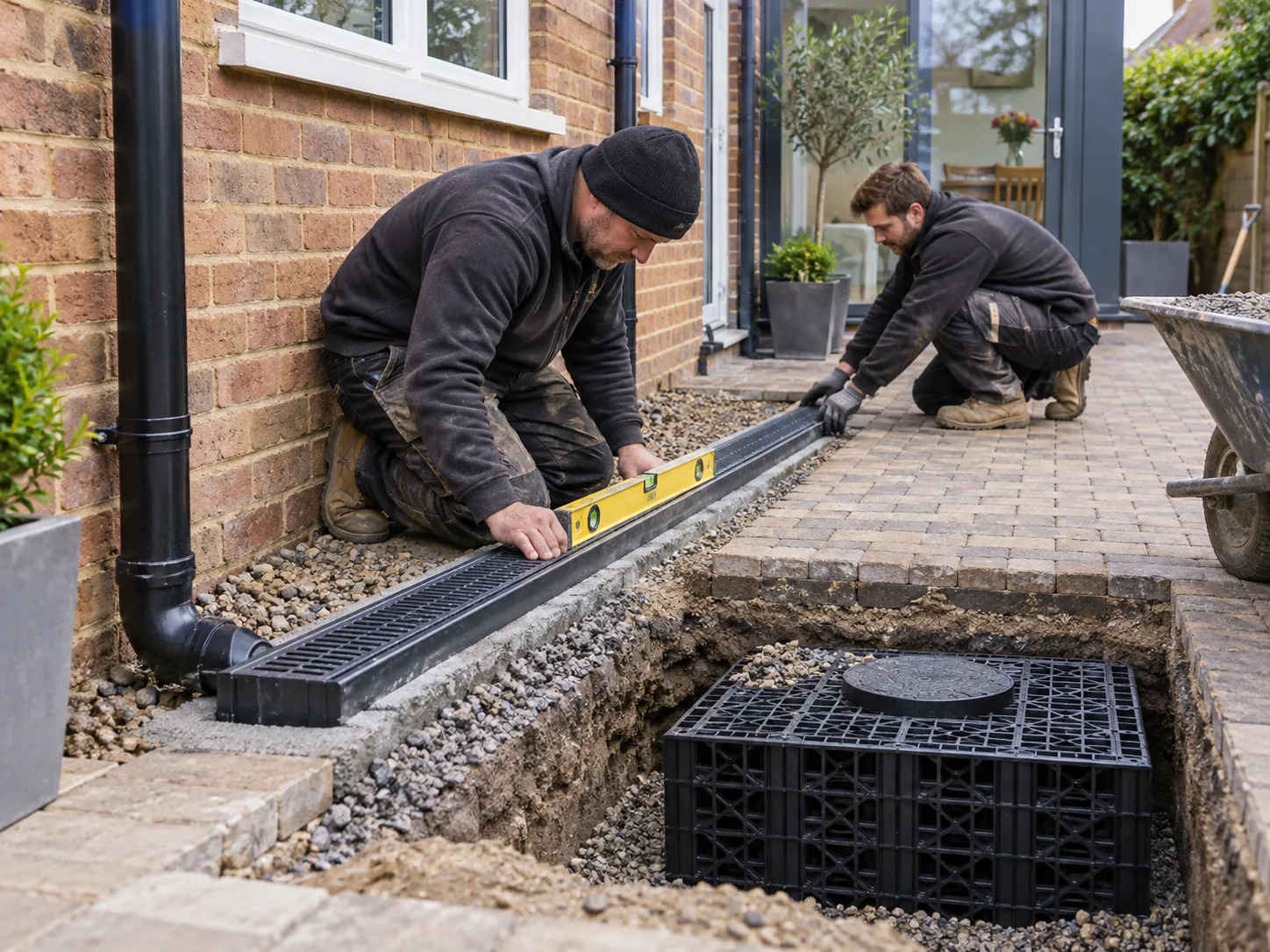
Many properties flood from surface water that collects on driveways, patios and gardens during heavy rain. Hard surfaces that slope towards the house, blocked gullies and undersized drains can all contribute. Drainage specialists can install channel drains, re-grade surfaces, add permeable paving and connect runoff to appropriate outlets.
Changes to driveways may be subject to planning rules on permeable surfaces, particularly in front gardens. Your contractor should advise.
Who is responsible
In England and Wales, property owners are generally responsible for drains within their property boundary that serve only their property. Shared drains and lateral drains beyond the boundary are usually the responsibility of the sewerage company. Arrangements differ in Scotland and Northern Ireland. A drainage contractor can help establish ownership before work starts, which may save you the cost of repairs that are not your responsibility.
Costs and choosing a contractor
Survey costs depend on the extent of the network and access. Repairs vary from minor jetting to major excavation. Ask for a fixed price for the survey, and for repairs, a clear specification linked to the survey findings.
Look for contractors with experience of flood-related drainage, appropriate insurance and a track record in your area. On Flood Protection Finder, drainage specialists list their services, coverage and case studies, and Verified profiles show the checks we have carried out.
Ongoing maintenance
Drains benefit from regular attention. Avoid putting fats, oils and wipes down drains, keep gullies clear of leaves, and consider periodic inspection if your property is at risk of flooding. Valves and pumps connected to the drainage should be serviced to the manufacturer's schedule.
Common questions
How long does a drainage survey take?
Most domestic surveys are completed in a few hours, with a report following within days.
Will the contractor need to dig?
Not for the survey. Some repairs can also be completed without excavation using lining techniques.
Can drainage work stop my property flooding?
It can reduce some types of flooding, particularly surface water and sewer backflow, but river or coastal flooding usually needs additional measures.