Specialists offering this service
See all in searchFlood doors and flood gates: what you need to know
What flood doors and gates are
Flood doors are external doors designed and tested to resist floodwater up to a stated depth. They look much like ordinary front or back doors, and they are used every day in the same way, but they have reinforced frames, compression seals and threshold arrangements that close tightly against water pressure. Many seal automatically when the door is shut and locked, so nothing needs to be deployed when a flood warning is issued.
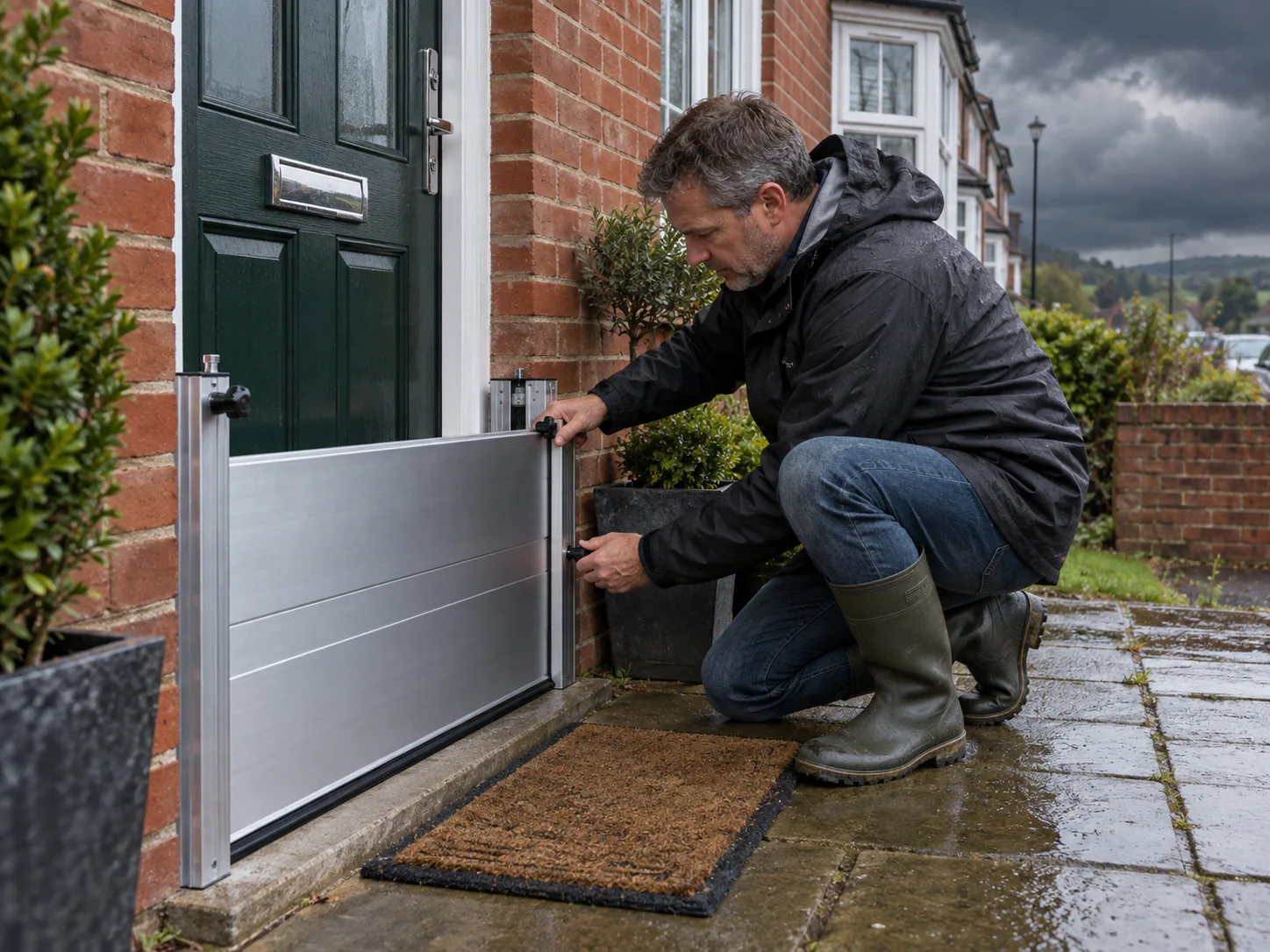
Flood gates, sometimes called flood boards or door barriers, are removable panels that fit across an opening when flooding is expected. They are fixed into permanent channels or brackets either side of the doorway and sealed against the ground and walls. When not needed, they are stored away and the doorway is used normally.
Doors or gates: which is right?
A flood door is permanently in place, so it offers protection even if no one is home when a flood arrives. That makes it a strong choice for people who may be away, elderly or less mobile residents, and areas with little warning of flooding such as surface-water hot spots. The trade-off is cost, and the need to replace an existing door.
A flood gate is usually less expensive and allows the existing door to remain, which can be important for period properties and listed buildings. However, someone has to fit it before the water arrives, and it needs to be stored where it can be found quickly. Gates suit properties with reliable warnings and occupants who can deploy them confidently.
Some properties use both: flood doors on the main entrances and gates on less-used openings such as patio doors or garage doors.
Part of a whole-house approach
It is essential to understand that a flood door or gate only protects the opening it covers. Water will find other routes, including air bricks, cracks and gaps in walls, service entries and drains. If these are not addressed, water may still enter and the investment in doors will be largely wasted. This is why an independent flood survey should come first, identifying every entry route and recommending a complete set of measures.
Walls also have a limit. Holding back deep water places significant pressure on a building's structure. Most guidance advises against trying to keep out water above about 600 mm in typical masonry buildings without structural advice, because the pressure can damage walls or floors.
Standards and performance
Look for doors and gates that have been independently tested and certified, for example under the BSI Kitemark scheme for flood protection products, which tests against the PAS 1188 specification. Certification covers the product under test conditions, so correct installation is just as important. Ask the installer how they will seal the frame to the wall, deal with the threshold and floor, and test the finished installation.
Check the stated protection height, the permitted leakage rate, and any conditions such as the need to lock the door or engage additional seals for full performance.
Installation and maintenance
Fitting a flood door typically takes a day per opening, though preparation of the opening and making good may add time. Gates need precise installation of channels or brackets and a good seal to the ground, which may require the threshold area to be levelled or rebuilt.
Seals and gaskets wear over time. Doors should be checked at least annually, with seals cleaned and inspected, and gates should be test-fitted periodically so that everyone knows how to deploy them and any damage to seals is found before a flood rather than during one.
Choosing an installer
Ask whether the installer is trained by the product manufacturer, how many similar installations they have completed, and what guarantees apply to both the product and the fitting. Request photographs of recent work and speak to past customers where possible. On Flood Protection Finder you can compare local installers, read reviews and case studies, and see which checks we have carried out on each business.
Common questions
Will a flood door look different?
Most modern flood doors are available in a range of styles and colours and are difficult to distinguish from a standard composite door.
Do flood doors need planning permission?
Usually not for houses outside conservation areas, but listed buildings and properties in conservation areas may need consent. Check with your local authority first.
How quickly can a gate be fitted?
A well-installed gate can typically be fitted in a few minutes by one or two people. Practise before you need it.